
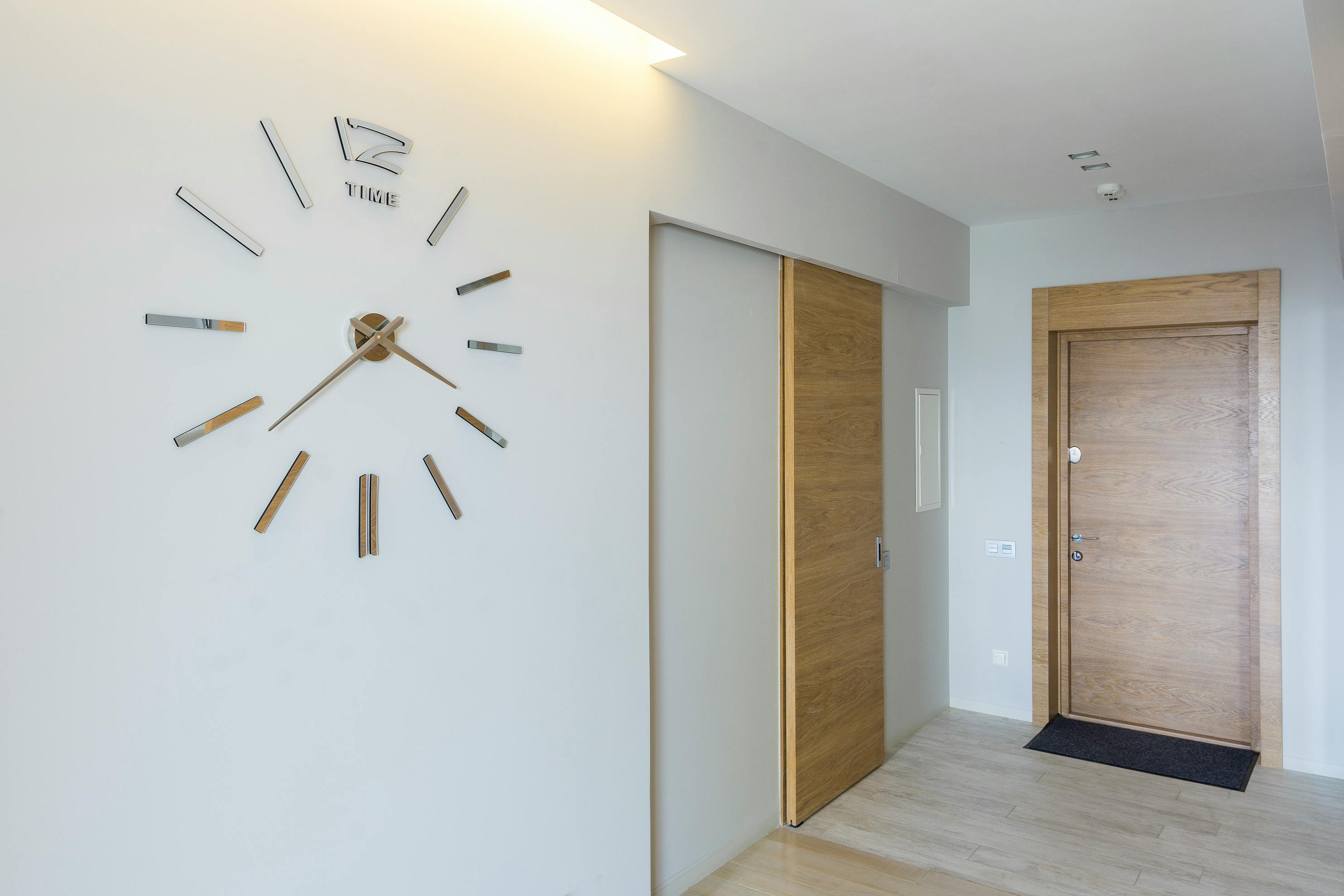
Once you’ve decided a sliding door suits the room, the next decision is the hardware and style. This is where sliding doors vary far more than a standard hinged door. The track system, roller type, and panel style all affect the look, and how the door actually feels to use day to day.
Track and Roller Systems
- Top-hung systems — the door hangs from rollers on an overhead track, and glides along the floor with a small guide channel. The most common, and easiest to fit in an existing room.
- Bottom-rolling systems — the door sits on a floor-mounted track. Less common in interiors, since the floor track can catch dirt and interrupt flooring.
- Soft-close mechanisms — a damper built into the track that slows the door in the last few centimetres. Prevents slamming, and reduces wear on the rollers over time.
Exposed Track vs Hidden/Boxed Track
An exposed track, running along the wall above the door, has become a deliberate style choice in its own right. Especially in matt black or brushed metal finishes, on barn-style sliding doors. A boxed or hidden track pelmet gives a cleaner, more traditional look, where you’d rather the door read as a normal fitted feature, not a visible sliding mechanism.
Popular Panel Styles for Sliding Doors
- Barn-style — solid timber, often with exposed batten detailing, on a visible black track
- Flush panel — a smooth, minimal slab that suits contemporary interiors, matching modern flat internal doors elsewhere
- Glazed sliding panels — combines the space-saving benefit of a slider with the light benefit of interior glazed doors
Maintenance Tips
Sliding doors rely on the track staying clean, and the rollers staying properly aligned. A quick wipe of the track every few months clears dust and hair. This prevents most of the sticking or dragging issues that develop over time. If a door starts to feel heavy to slide, check the roller adjustment screws first, before assuming the whole mechanism needs replacing.
Frequently Asked Questions
Is an exposed track sliding door harder to fit than a boxed one?
No — an exposed track is usually the simpler retrofit. It fixes directly to the wall face above the opening, rather than needing a built pelmet to conceal it.
How much wall space does a sliding door track need?
As a rule of thumb, allow wall space equal to the door’s width to one side. Or split either side for a bypass double-slider, plus a little extra for the end stops.
Can sliding door hardware be fitted to any door?
Most flat or lightly panelled doors can be adapted with the right track kit. But very heavy solid timber doors need a heavier-rated track and roller set, to avoid excessive wear.