
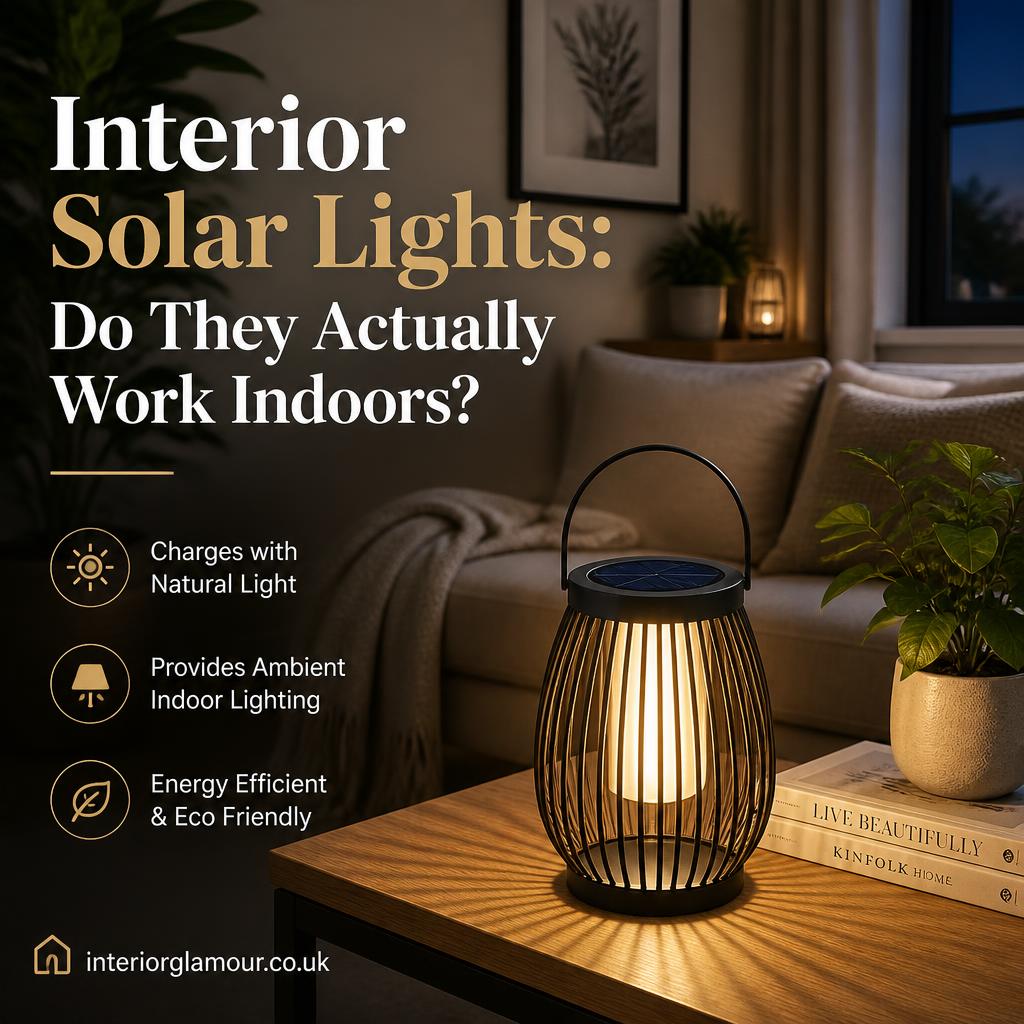
Interior solar lights use a small panel to charge a battery, then release that stored energy as light, without ever connecting to the mains. Outdoors, this is straightforward, since the panel gets direct sun. Indoors, results depend heavily on how much real daylight actually reaches the fitting.
How Solar Lights Work Indoors
The solar panel still needs strong, fairly direct light to charge properly, so a fitting near a bright, unobstructed window performs far better than one in a shaded corner or a north-facing room. Glass filters some UV and light intensity too, so charging indoors is typically slower and less complete than the same panel would achieve outside.
Where Interior Solar Lights Work Best
- Conservatories and garden rooms with strong, direct daylight through large glazed areas
- Skylights or roof lanterns, where light is more consistent throughout the day
- South-facing windowsills, for small decorative solar lanterns or string lights
They’re a poor fit for windowless rooms, hallways, or spaces with only brief or indirect daylight, since the battery simply won’t charge enough to provide useful light in the evening.
Solar vs Battery vs Mains-Powered Lighting
Battery-only lights (rechargeable via USB or replaceable batteries) offer more reliable performance indoors, since they don’t depend on unpredictable daylight. Mains-powered lighting remains the most consistent option for anywhere light is needed reliably every evening. Solar suits a genuine no-wiring, low-maintenance want, in a room with strong natural light, more than it suits everyday functional lighting.
Frequently Asked Questions
Can interior solar lights be left permanently indoors?
Yes, as long as the room gets enough direct daylight to charge them. In a dim room, they’ll run down faster than they recharge, eventually giving very little light output.
Do interior solar lights need direct sun, or is daylight enough?
Bright, indirect daylight can charge them to some extent, but direct sun charges far faster and more fully, so placement near an unobstructed window matters a lot.
Are solar lights bright enough for reading or task use?
Generally not. Most interior solar lights are designed for soft, decorative, or accent lighting, rather than the brighter, consistent output needed for reading or close task work.