
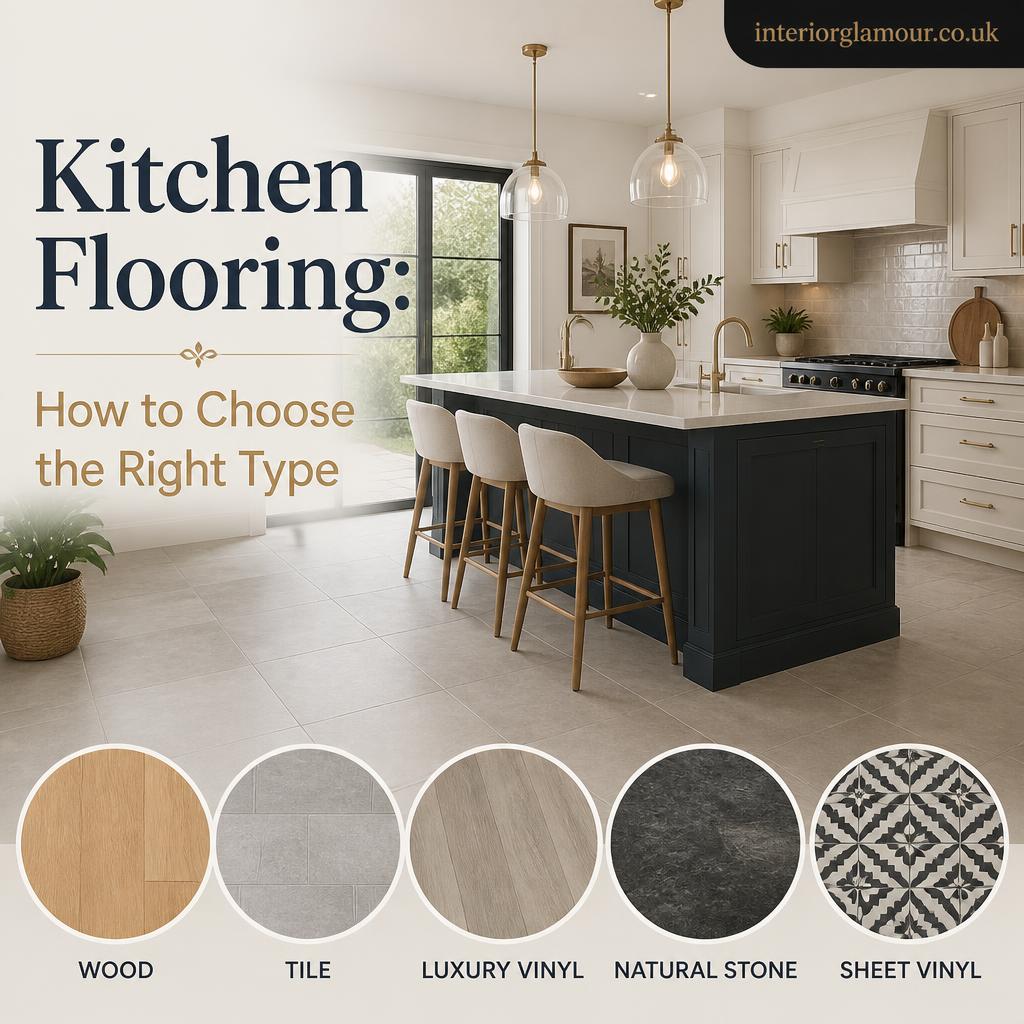
Kitchen flooring takes more daily punishment than almost any other surface in the house, from dropped pans to spilled water and constant foot traffic. The right choice balances water resistance, comfort underfoot, and how the material actually looks alongside cabinetry and worktops.
What Kitchen Flooring Needs to Handle
- Water resistance — spills are inevitable, so a fully waterproof or highly water-resistant surface reduces the risk of warping or staining
- Slip resistance — kitchens are prone to wet or greasy patches, so textured or slip-rated finishes matter more here than in a living room
- Durability under heavy use — dropped items, chair legs, and constant footfall all take a toll over time
- Ease of cleaning — a surface with minimal grout lines or seams is generally quicker to keep hygienic
Kitchen Flooring Options Compared
Vinyl and LVT flooring are fully waterproof and comfortable underfoot, making them one of the most practical kitchen choices, and they’re available in wood-effect and stone-effect finishes that mimic more expensive materials. Engineered wood flooring can work in a kitchen too, and copes with humidity better than solid wood, though it isn’t fully waterproof, so spills need wiping up promptly. Porcelain or ceramic tile is extremely durable and fully waterproof, though it’s colder and harder underfoot than vinyl or wood. Natural stone gives a premium look but generally needs sealing, and is more prone to staining from acidic spills like wine or citrus.
Underfloor Heating in the Kitchen
Tile, stone, and engineered wood all conduct heat well, making them strong choices where underfloor heating is planned. Vinyl and LVT are also usually compatible, though it’s worth checking the manufacturer’s maximum temperature rating before fitting, since some vinyl products can be affected by prolonged high heat.
Colour and Finish Considerations
Lighter floors help a kitchen feel bigger and brighter, but show dirt and marks more readily than a mid-tone or patterned finish. A slightly textured or matt surface, rather than high gloss, tends to hide everyday scuffs and footprints better in a room used this heavily.
Frequently Asked Questions
What’s the most practical flooring for a busy family kitchen?
Vinyl or LVT flooring is generally the most practical all-round choice, combining full waterproofing, comfort underfoot, and lower cost than tile or stone.
Can wood flooring be used in a kitchen?
Engineered wood is more suitable than solid wood, since it handles humidity better, but spills should still be cleaned up quickly to protect the surface long-term.
Is tile flooring cold in a kitchen?
It can be, particularly without underfloor heating. Tile is an excellent conductor of heat, which makes it ideal when paired with underfloor heating, but noticeably cold without it.