
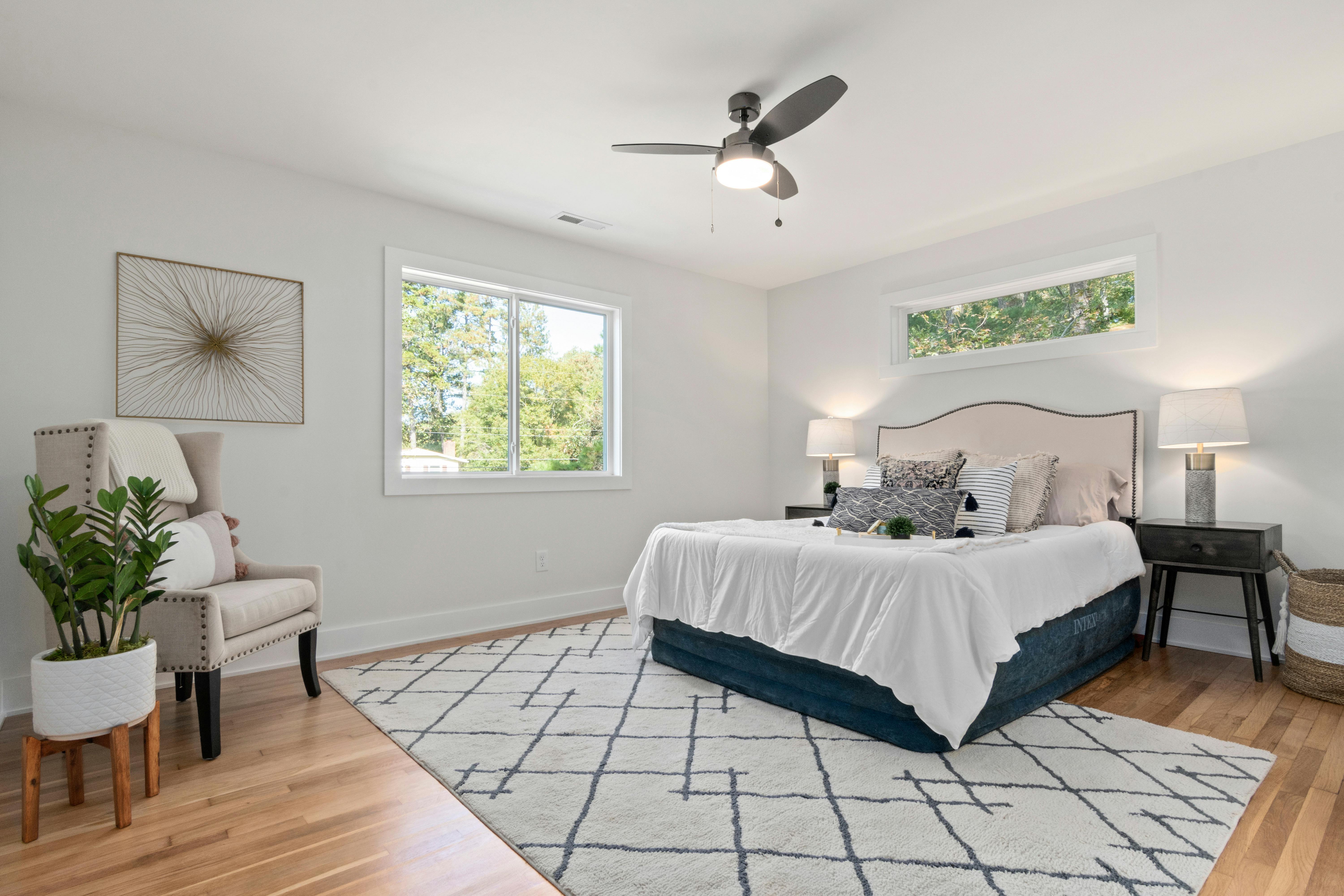
When we settle in under the covers, the softness of the pillow, the warmth of the blanket and the firmness of the mattress should all help us drift into a dreamlike state fairly quickly. Have you ever wondered why it’s not happening for you, though?
One of the most influential factors in any bedroom is the colour. And, despite having the best blackout curtains, the snuggest pyjamas and the most comfortable bed ever, the colours of your walls, flooring, bedding and lighting all play a role in just how much of a good night’s sleep you get.
When colours work well together, they harmonise and help create the right “feel” for a room. When they clash and are perhaps too vibrant, they disturb that feel and can completely change how much time you spend in the room or how comfortable you are in it.
In this blog, we look at how your bedroom colour scheme plays a role in your sleep and what you can do about it.
What is the link between colour and sleep?
Colour psychology is a thing! It’s used in interior design to help influence mood and behaviour. That is why for many bedrooms, you’ll tend to see soft tones to help promote relaxation. Cool shades, like a pale blue or gentle green, are known to be calming and can help reduce stress levels. This is perfect when you’ve had a hectic day at work and just want to get to sleep! Neutral colours like warm whites, soft greys and beige can help create a peaceful backdrop that doesn’t overwhelm the senses.
That being said, bold, highly saturated colours can add a spark of personality and feel energising when used moderately. This may be just the tonic when you wake up in the morning! However, if colours like this become too imposing, they may have the opposite effect; they could shift the overall atmosphere from calm to disruptive. So what’s the answer?
Balance….it’s all about the balance. Allow colours to enhance a space without anything becoming too dominant and overpowering the room.
The bedroom colour palette
A bedroom shouldn’t rely on one colour alone. It should be created with a combination of shades throughout. Walls are often the tone-setter, but across the whole bedroom, many other features convey how a room feels.
Bedroom flooring often plays an understated role in a room’s feel. It’s one of the largest surfaces with its colour quietly anchoring the space, helping to influence whether the room feels light and open or warm and grounded. Flooring that naturally complements the wall colours and soft furnishings helps create a sense of flow and reduces visual clutter, therefore making your bedroom instantly feel calmer.
Light and dark tones underfoot
On the subject of flooring, it is important to stress just how much impact it can have. Lighter flooring can make a bedroom feel spacious and airy, particularly when the room is small or has limited natural light. Pairing this with soft, neutral walls ensures the bedroom maintains a clean, calm atmosphere.
Dark flooring has its place, too. By choosing a darker carpet or LVT, you add depth and cosiness to your bedroom. If you want the room to feel intimate and restful, these deep tones work perfectly with warm textiles and layered lighting. Natural wood shades on bedroom flooring can also help fit the vibe you are aiming for. These muted finishes often strike a balance, offering warmth, but not overwhelming the room in any way.
Texture to enhance calm
We’ve focused a lot on the colours of the room, but the texture of the materials also plays an important part. A mixture of textures in a room helps the room avoid feeling flat or clinical. Soft bedding, upholstered furniture and layered fabrics all give an extra degree of comfort.
It’s the same with the flooring. Whether you have smooth flooring, like LVT, subtly textured surfaces like carpet, or a hard floor like solid natural wood, combining the flooring with rugs and other textiles softens the room not only visually but physically too. Cohesive textures support a feeling of calm without pulling attention away from anything else in the room.
Tips for a sleep-friendly bedroom
If you are hoping to improve your sleep through colour choices, these top tips may help when you decide to redecorate your bedroom or make some small changes to it:
- Keep just two or three main colours to keep the space visually calm
- Avoid sharp contrasts, especially around the bed
- Choose flooring and furnishings that complement natural light levels
- Use texture for added stimulus rather than adding more colours
Creating a bedroom that supports good sleep is about focusing on more than one design element. It’s about how each works together. Colour, light, texture and layout all play a crucial role, with the flooring quietly supporting the overall look and feel. Make some subtle changes today and transform your bedroom into a place where relaxation comes naturally and sleep is effortless.