
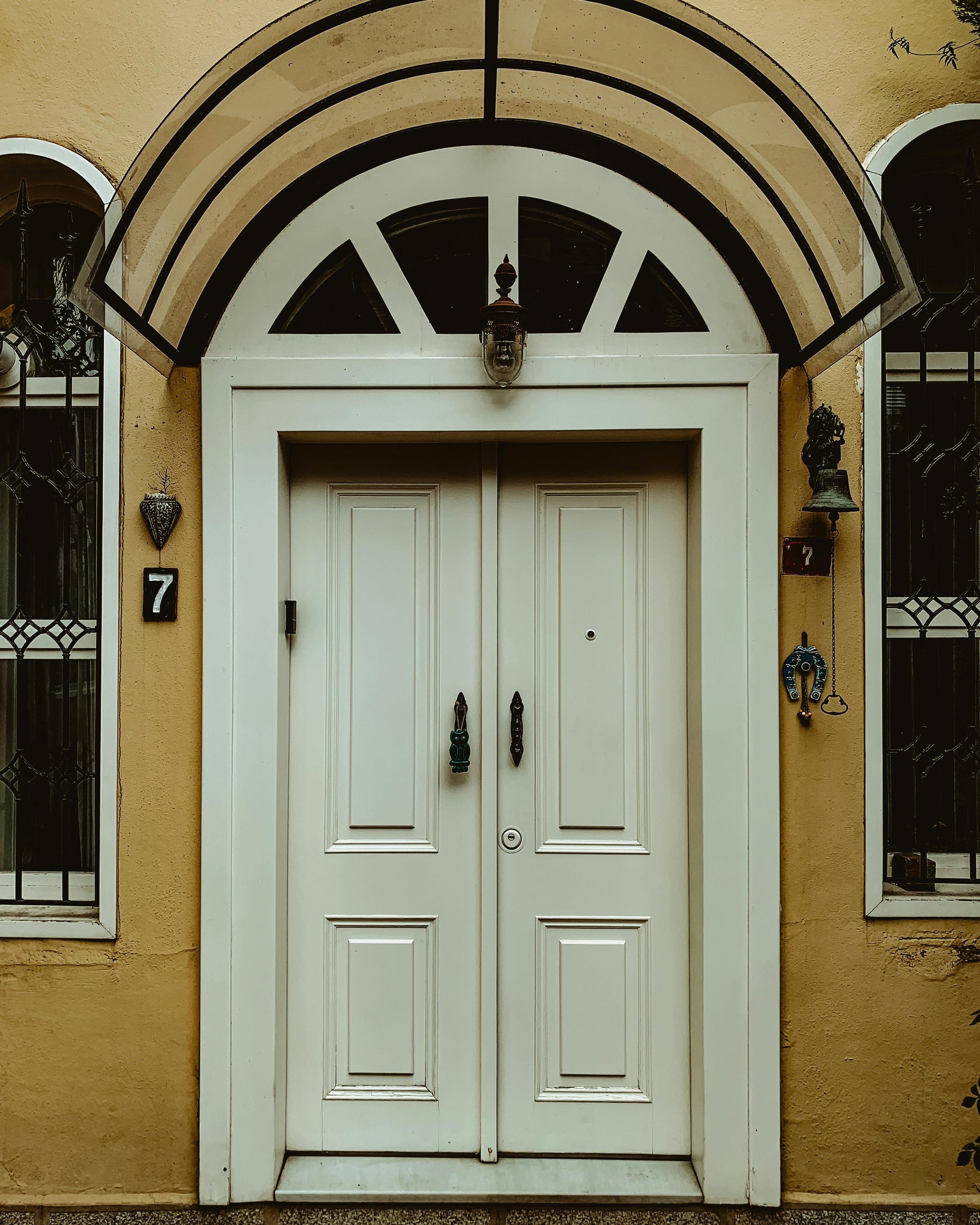
Interior double doors are a pair of matching doors, hung together in one wide opening. They’re one of the easiest ways to make a doorway feel intentional, not just functional. They suit openings too wide for a single door. And they give a room a sense of arrival that a standard door can’t match.
Where Double Doors Work Best
- Living room to hallway — a classic Victorian and Edwardian layout, often glazed to bring borrowed light into a darker hall
- Dining rooms — open them fully for entertaining, then close them to keep the room separate day-to-day
- Home offices and studies — solid double doors help contain noise, while still giving a generous entrance
- Wide openings between a kitchen and garden room — often paired with interior glazed doors, to maximise light between spaces
Hinged vs French-Style Double Doors
Most interior double doors either open outward on hinges, like a traditional pair, or are styled as “French doors interior” with multiple glazed panes across both leaves. Hinged solid pairs suit a formal, period-appropriate room. Glazed French-style pairs work better where you want light to travel between two rooms, without fully opening the doors.
Matching Double Doors to the Rest of the House
Double doors read as a feature. So consistency matters more here than with a single internal door. Match the panel style to other doors in the house, whether that’s a set of 1930s interior doors, cottage interior doors, or plain modern flat panels. This keeps a double-door opening from looking like an odd addition, rather than part of the original layout.
Cost Considerations
A double-door opening needs two matching leaves, plus a wider frame. As a starting point, budget roughly double the cost of a single interior door in the same style. Add an allowance for a wider frame kit, if the opening isn’t a standard size. Glazed double doors cost more than solid ones, because of the glazing units and beading on both leaves.
Frequently Asked Questions
Do interior double doors need to be load-bearing openings?
Not necessarily. Many double-door openings are simply a wide standard stud partition. It only becomes a structural consideration when you’re widening an existing single-door opening. In that case, a lintel is usually needed.
Can one door in a pair be used on its own day-to-day?
Yes. Most double doors have one active leaf, with a standard handle and lock. The second leaf bolts shut at the top and bottom, until you want the full width open.
Are double doors harder to soundproof than a single door?
Slightly. The meeting point, where the two leaves close together, is the weak spot for sound and draughts. A good rebated meeting edge and quality seals matter more here than on a single door.