
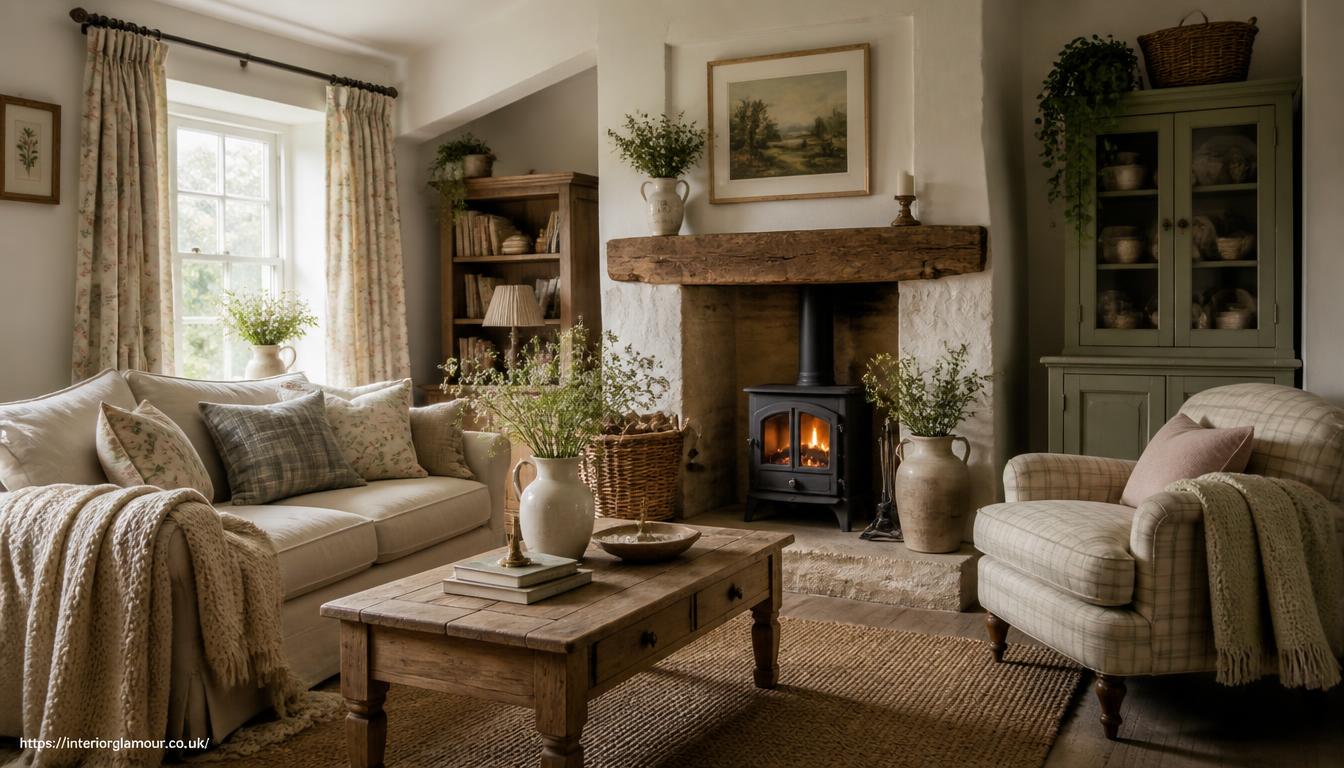
Cottage interior style leans on warmth, texture, and a slightly imperfect, lived-in feel. It borrows from traditional English country homes, but it doesn’t need a period property to work. The key is layering natural materials and soft, muted colour, rather than chasing a single “look” from a catalogue.
Core Elements of Cottage Style
- Exposed or faux beams — even a single painted beam adds structure and character to a plain ceiling
- Soft, muted colour palettes — sage green, dusty pink, cream, and warm off-whites, rather than sharp contrast
- Natural textiles — linen curtains, wool throws, and woven baskets for storage
- Traditional joinery details — panelled doors, painted skirting, and simple, often black, ironmongery
- Open shelving with everyday objects — displayed crockery, jars, and books, rather than hidden behind flat cabinet fronts
Cottage Style in a Modern Home
You don’t need low ceilings or original beams to borrow the style. A modern home can pick up cottage character through furniture and finishes alone. A ledge-and-brace door, a Belfast sink, or open wooden shelving in a kitchen all bring the same warmth, without any structural changes.
Where It Works Best
Kitchens and living rooms take to cottage style most naturally, since both benefit from warmth and a lived-in feel. Bathrooms can pick up smaller touches, like traditional taps or a panelled bath surround, without going fully rustic throughout.
Common Mistakes to Avoid
- Mixing too many patterns at once, which can tip the look from cosy into cluttered
- Using cold, stark white instead of a warmer off-white, which fights against the style’s softness
- Choosing modern, sharp-edged furniture that clashes with the traditional joinery and textiles
Frequently Asked Questions
Can cottage style work in a small flat?
Yes. Soft colour, natural textiles, and a few traditional details go a long way, even without period features like beams or fireplaces.
Is cottage style the same as farmhouse style?
They overlap, but farmhouse style tends to lean more rustic and utilitarian, with rougher wood and larger statement pieces. Cottage style is generally softer and slightly more refined.
What colours should I avoid in a cottage-style room?
Very cool, sharp colours, like bright white or cold grey, tend to work against the warmth cottage style relies on. Warmer neutrals suit it better.