
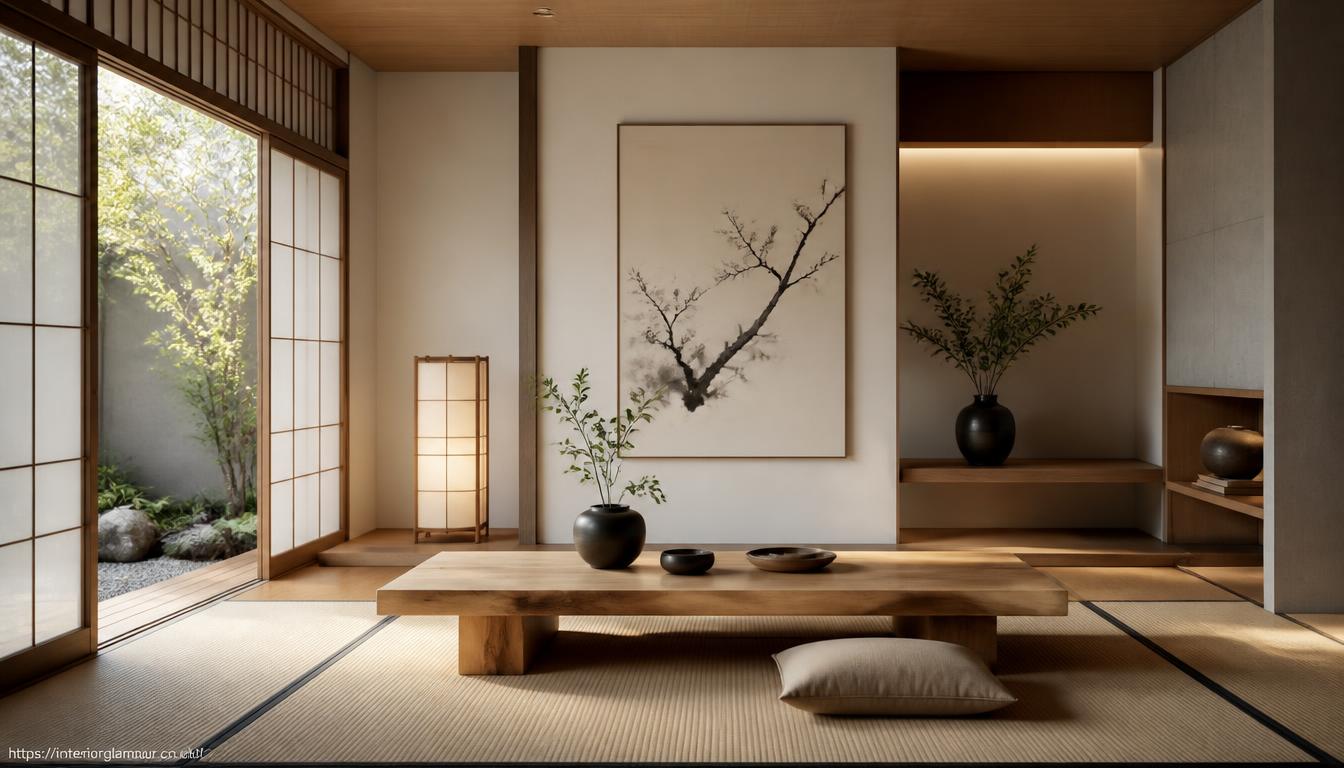
Japanese interior design centres on simplicity, natural materials, and a sense of calm. It isn’t about filling a room with specific objects. Instead, it’s a way of thinking about space, light, and what a room actually needs, rather than what could be added to it.
Core Principles
- Ma (negative space) — the deliberate use of empty space, treated as part of the design, not a gap to be filled
- Natural materials — unfinished or lightly treated wood, bamboo, paper, and stone, left visible rather than covered
- Low furniture — low tables and floor seating, which keep sightlines open and rooms feeling larger
- Muted, earthy colour — soft browns, greys, and off-whites, echoing natural materials rather than bold contrast
- Clutter-free surfaces — storage that hides everyday items, so rooms stay visually calm
Japandi: A Popular Hybrid
Japandi blends Japanese minimalism with Scandinavian warmth. It keeps the clean lines and negative space of Japanese design, but adds the cosier textiles and pale wood tones common in Scandinavian interiors. This hybrid has become one of the most popular entry points into the style for UK homes.
Applying the Style Without a Full Renovation
Full shoji screens or tatami flooring aren’t necessary to bring the principles home. Clearing surfaces, choosing furniture with visible natural wood grain, and leaving more empty wall space than usual can shift a room noticeably toward this calmer feel, without any structural work.
Where It Works Best
Bedrooms and home offices benefit most from the style’s calming effect, since both rely on a clear, uncluttered mind to function well. Living rooms can take it on too, though a household with young children may find the minimal storage approach harder to maintain day-to-day.
Frequently Asked Questions
Is Japanese interior design the same as minimalism?
They overlap, but Japanese design is rooted in specific principles, like negative space and natural materials, rather than simply owning fewer things. Minimalism is broader and less tied to any particular material palette.
Does this style work in a small UK flat?
Yes, often especially well. Low furniture and clear sightlines can make a small room feel more open, which suits compact UK properties.
What’s an easy first step to try this style?
Clear one surface completely, and leave it empty. It sounds small, but it’s the fastest way to feel the calming effect negative space has on a room.