
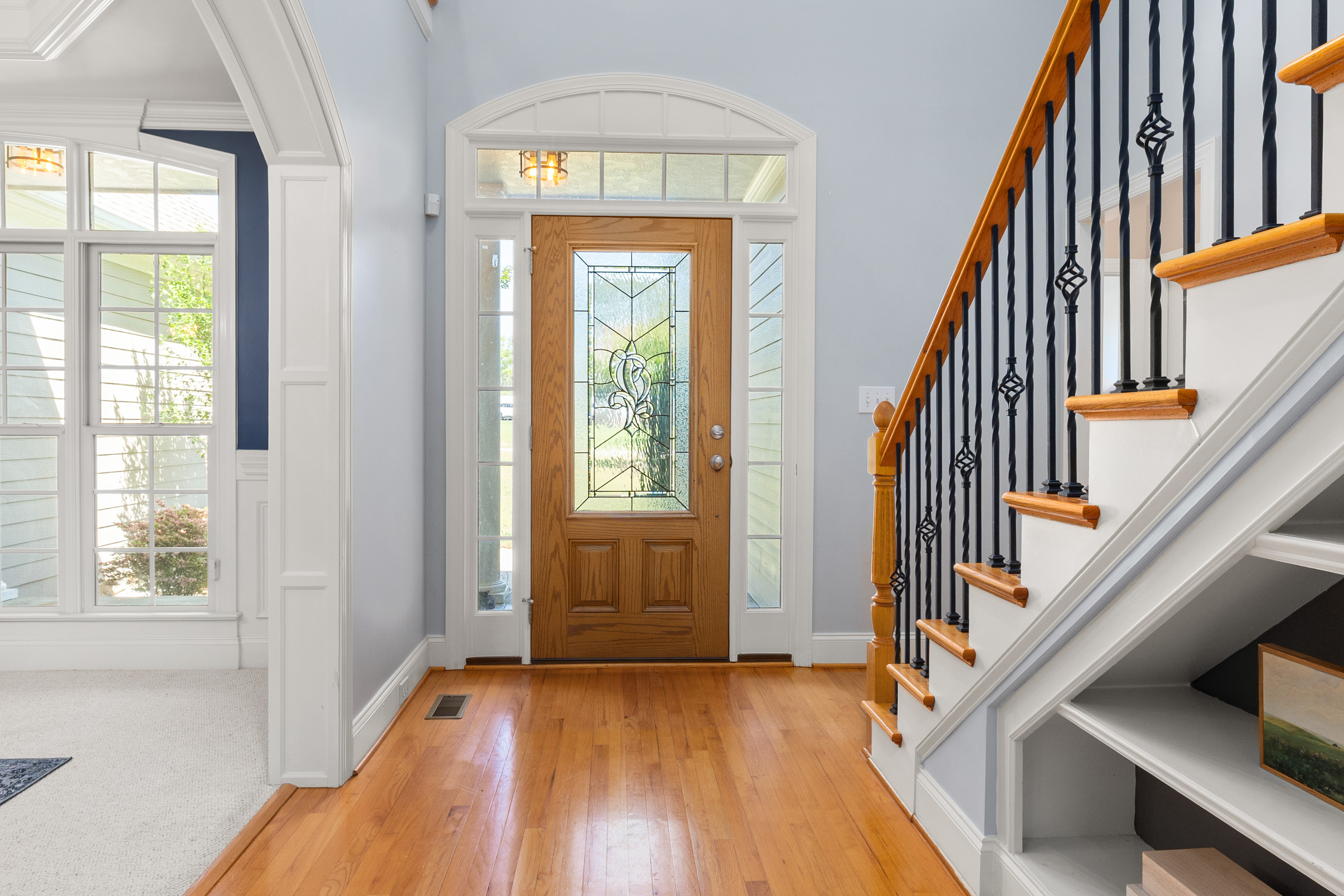
An interior glazed door replaces some or all of a solid panel with glass. Light can then travel between two connected rooms, even when the door is closed. In UK homes, hallways, understairs rooms, and north-facing spaces often lack their own natural light. A glazed door can brighten a space noticeably, without any building work.
How Much Glass Is Too Much?
Glazed doors range widely. Some have just a single small pane near the top, enough to stop a hallway feeling like a corridor. Others are almost entirely glass. The right amount depends on the room:
- Home offices and studies — a full or half-glazed door lets daylight reach a desk from an adjoining room, while still closing off sound during calls
- Bathrooms and WCs — frosted or reeded glass gives privacy while still letting light through; clear glass is rarely used here
- Living room to hallway — a multi-pane glazed door, often styled like French doors interior, is a classic way to let light spill into a darker hall
Glass Types to Consider
- Clear glass — maximum light transfer, best where privacy isn’t a concern
- Frosted or satin glass — obscures the view while still passing light through; the standard choice for bathrooms
- Reeded or fluted glass — a textured, ridged pattern, popular for a more decorative, slightly period-inspired look
- Georgian bar / Crittall-style glazing — glass divided into a grid of small panes, often paired with a black frame for an industrial-meets-traditional look
Safety Glass Requirements
UK Building Regulations require safety glass, either toughened or laminated, in doors and in glazing close to floor level. This applies particularly to “critical locations”, such as low-level glazing near a walkway. Any reputable supplier specifies toughened glass as standard for door panels. It’s still worth confirming this is included, especially with older or budget stock doors.
Frequently Asked Questions
Do glazed interior doors reduce privacy too much?
Only with clear glass, in a room that needs privacy. Frosted, reeded, or partially glazed designs give the light benefit without a clear view through. That’s why they’re the default choice for bathrooms and bedrooms.
Are glazed doors more expensive than solid doors?
Yes, generally. The glazing units, safety glass, and extra beading add cost compared with an equivalent solid panel door, though the gap narrows with budget stock designs.
Can an existing solid door be converted to glazed?
In some cases, a panel can be cut out and glazed. But it’s usually more reliable, and often similar in cost, to replace the door with a purpose-made glazed design instead.