
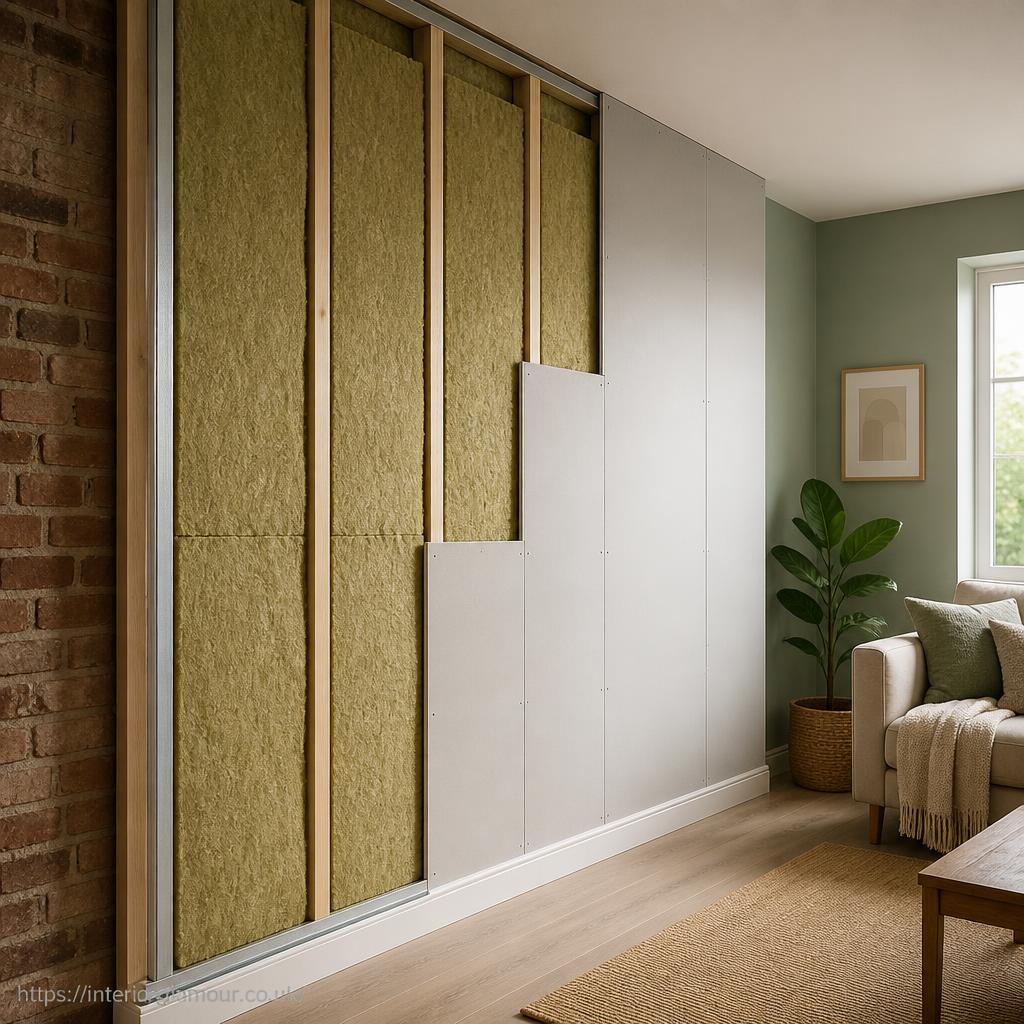
Interior wall insulation adds a layer to the inside face of an external wall, rather than the outside. It’s the practical option for homes where external insulation isn’t possible, whether that’s a listed building, a terraced house with shared walls, or simply a tighter budget.
When Interior Wall Insulation Makes Sense
It suits solid-wall homes, common in Victorian and Edwardian properties, which have no cavity to fill. It’s also the more realistic choice where external wall insulation would alter the outside appearance of a property, particularly on a listed building or one in a conservation area. For homes that do have a cavity, cavity wall insulation is usually the cheaper and less disruptive option instead.
Types of Interior Wall Insulation
- Rigid insulation boards — fixed directly to the wall, offering strong thermal performance for a relatively slim profile
- Insulated plasterboard — combines insulation and a finished plaster-ready surface in one board, simplifying the fitting process
- Stud wall with insulation batts — a new stud frame built out from the wall, filled with mineral wool or similar insulation, then plasterboarded over
What It Costs to Lose Room Space
Interior wall insulation typically adds somewhere between 50mm and 100mm to the thickness of each treated wall, depending on the system used. In a small room, this can noticeably reduce floor space, which is worth weighing against the energy savings, particularly in already compact rooms.
Cost of Interior Wall Insulation
Rigid board systems typically cost more per square metre than a stud-and-batt build-up, but need less depth and less disruption to skirting, sockets, and coving. Professional installation across a typical room usually runs into several hundred to a few thousand pounds, depending on room size and the system chosen.
Frequently Asked Questions
Does interior wall insulation cause damp problems?
It can, if fitted without the right vapour control layer, since trapping moisture between the insulation and the original wall risks condensation forming behind the new surface. A competent installer accounts for this in the design.
Is interior wall insulation as effective as external insulation?
It performs similarly well thermally, though external insulation avoids any loss of internal floor space and doesn’t disturb skirting, sockets, or radiators during fitting.
Can I insulate just one room instead of the whole house?
Yes, interior wall insulation can be applied room by room, which makes it a practical option for homes doing the work in stages rather than all at once.