
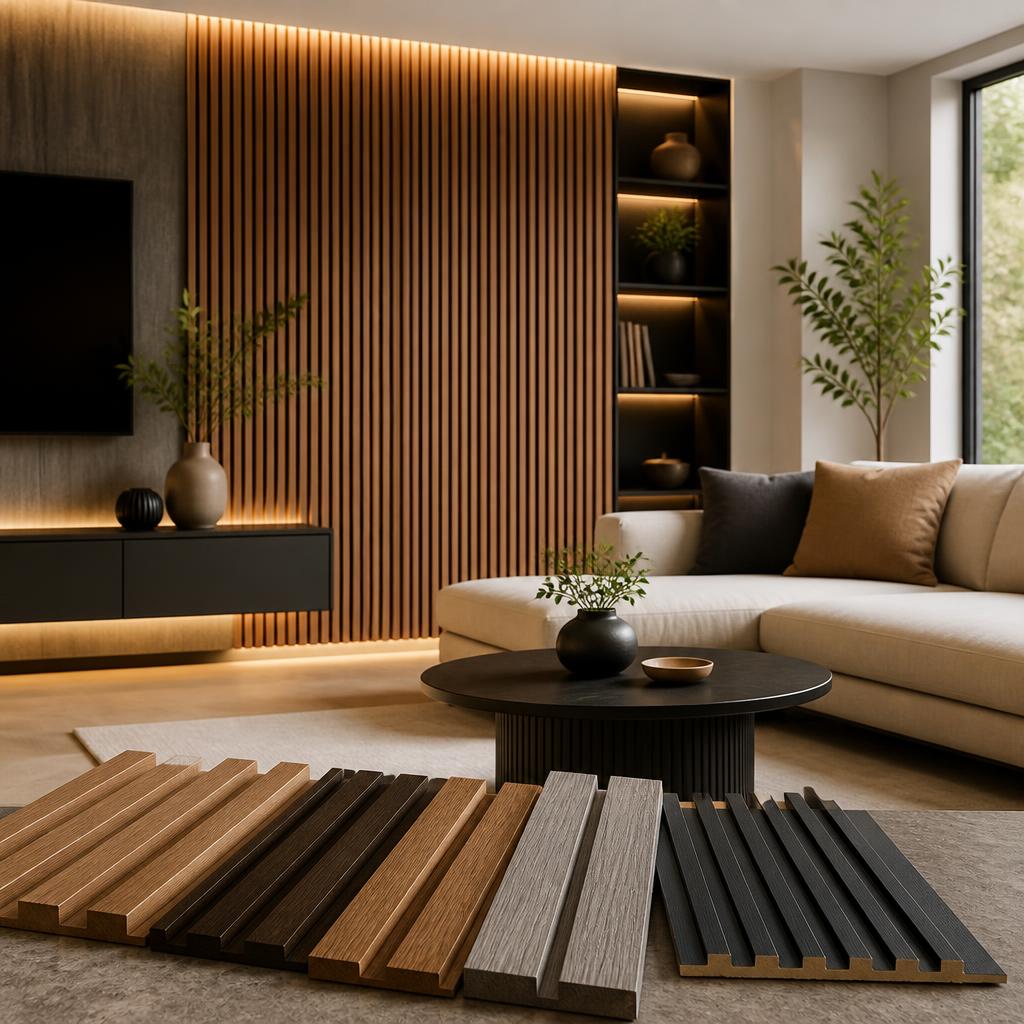
Interior wood cladding adds texture and warmth to a wall in a way flat paint can’t match. It’s become a popular feature in living rooms, hallways, and bedrooms, whether as a full wall treatment or a single accent panel behind a bed or sofa.
Types of Interior Wood Cladding
- Tongue and groove panelling — interlocking boards that create a clean, seamless run, often used for a full-height feature wall
- Shiplap — overlapping horizontal boards with a distinct shadow line, giving a slightly more textured, rustic look
- Slat wall panelling — evenly spaced vertical slats, usually mounted on an acoustic felt backing, popular for a contemporary, architectural look
- Reclaimed or feature timber — irregular boards with visible grain and character, often used for a single accent wall rather than a whole room
Choosing a Style for the Room
Tongue and groove suits period and cottage-style homes well, especially alongside features like cottage interior doors and traditional skirting. Slat wall panelling leans more contemporary, and works particularly well as a headboard wall or a feature behind a TV, where its rhythm and shadow lines catch the light.
Full Wall vs Partial Cladding
Cladding a wall to dado height, rather than floor to ceiling, keeps a room feeling grounded without becoming heavy. Full-height cladding on a single wall, left as the room’s one feature wall, tends to work better than cladding every wall in a small room, which can make the space feel closed in.
Fitting Considerations
Most cladding kits are designed to fix directly to battens on the wall, rather than straight onto plaster, which allows for any minor wall irregularities and creates a small cavity behind the panels. This matters for sockets and switches too, since fittings often need extending forward to sit flush with the new surface once cladding is added.
Frequently Asked Questions
Does wood cladding need to be treated or sealed?
Most interior cladding comes pre-primed or can be painted, stained, or left natural. Sealing with an interior varnish or oil helps protect it from everyday marks, particularly in hallways.
Is wood cladding difficult to fit yourself?
Tongue and groove and slat panels are reasonably straightforward for a confident DIYer, provided the wall is measured accurately and battens are fitted level. Uneven or curved walls make the job harder.
Can wood cladding be fitted over existing tiles or panelling?
In some cases, yes, as long as the surface underneath is flat and secure enough to fix battens to. A professional check is worth it if the existing surface is uneven or loose.