
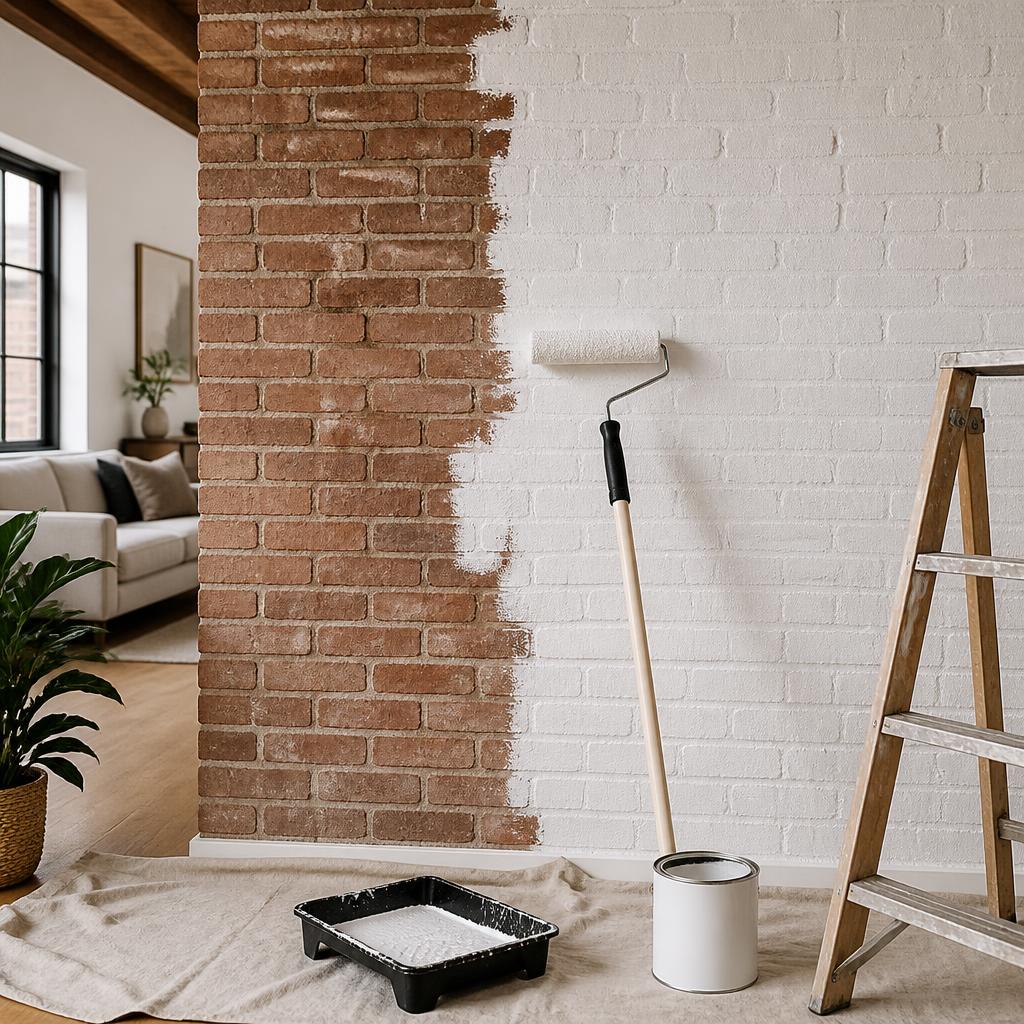
How to Paint a Brick Interior Wall
An exposed brick interior wall has real character, but bare brick isn’t always the look a room needs. Painting it over, whether in a soft white, a bold colour, or a limewash finish, can transform the feel of a room without removing the texture that makes brick interesting in the first place.
Should You Paint Brick or Leave It Bare?
Bare brick suits an industrial or rustic scheme well, but it can also make a room feel darker and busier than intended, since the texture and colour variation draw the eye constantly. Painting the brick calms that down. A single flat colour lets the texture show through as a subtle detail, rather than the main event.
Preparing a Brick Wall Before Painting
- Brush off loose dust, cobwebs, and any flaking mortar with a stiff brush
- Fill any large gaps or crumbling mortar joints before painting, since paint won’t bridge structural cracks
- Wash off efflorescence (the white, powdery salt deposits common on brick) with a stiff brush and water, and let the wall dry fully
- Apply a masonry primer or stabilising solution if the brick is dusty or has been recently repointed
Choosing the Right Paint
Brick needs a breathable paint, ideally a masonry emulsion or a specialist brick paint, rather than a standard interior wall emulsion. Breathable paint lets any residual moisture in the brick escape gradually. A non-breathable paint can trap moisture instead, which risks damp problems building up behind the surface over time. If damp is already a concern in the room, it’s worth reading up on how to protect a home from rainwater damage before painting over brick, since trapped moisture makes existing issues worse, not better.
Application Tips
A masonry brush or a thick-pile roller works the paint into the mortar lines and surface texture far better than a smooth roller. Two coats are almost always needed, since brick is porous and soaks up the first coat unevenly. Painting in sections, rather than trying to cover a whole wall in one pass, gives a more even, streak-free finish.
Frequently Asked Questions
Can you paint over brick that’s had damp problems?
Only once the underlying cause has been fixed. Painting over active damp traps moisture and makes the problem worse, so resolve the source first, then let the wall dry out fully before painting.
Does painted brick need maintenance?
Very little. A wipe down keeps it clean, and most masonry paints last several years indoors before a top-up coat is needed, since interior brick doesn’t face the same weathering as an exterior wall.
Is painting brick reversible?
Not easily. Paint soaks into the porous surface, so stripping it back to bare brick is a difficult, dusty job. It’s worth being confident in the decision before painting over original brickwork.