
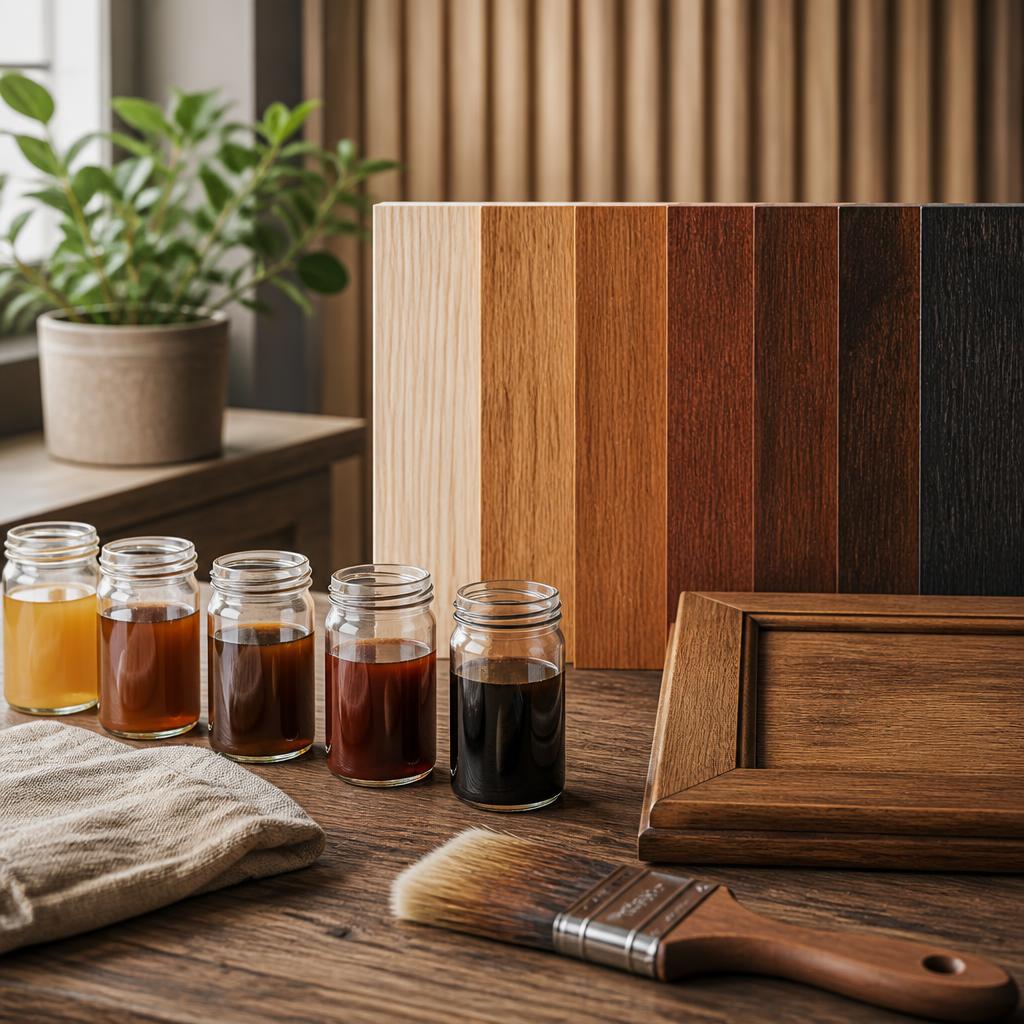
Interior wood stain changes the colour of timber while letting the grain show through, unlike paint, which sits on top and hides it. It’s the go-to finish for skirting, doors, floorboards, and furniture where the wood itself is worth showing off, not covering up.
Types of Interior Wood Stain
- Water-based stain — low odour, dries quickly, and cleans up with water, though it can raise the wood grain slightly
- Oil-based stain — deeper colour penetration and a longer working time, but stronger fumes and a slower dry time
- Gel stain — thicker and easier to control on vertical surfaces, useful for doors and furniture where drips are a problem
- Water-based vs oil-based also affects the topcoat: oil-based stains generally need an oil-based or compatible varnish over the top, so it’s worth checking compatibility before buying
Preparing Wood for Staining
Stain reacts to the condition of the wood underneath, so preparation matters even more than with paint. Sand with progressively finer grit, finishing at around 180-220 grit for a smooth, even finish. Wipe away all dust with a tack cloth. On softwoods like pine, a pre-stain conditioner helps prevent blotchy, uneven colour, since these woods absorb stain unevenly without it.
How to Apply Wood Stain
- Test the stain on an offcut or a hidden area first, since the final colour can look different on different wood species
- Apply with a brush or cloth, working with the grain rather than across it
- Wipe off excess stain after a few minutes, rather than letting it pool and dry unevenly on the surface
- Let it dry fully, then apply a second coat if a deeper colour is wanted
- Seal with a varnish, wax, or oil topcoat once the stain has cured, to protect the finish day-to-day
Matching Stain to Existing Woodwork
Different wood species take stain differently, so the same tin of stain looks noticeably different on oak compared with pine. If you’re matching new skirting or a door to existing woodwork, such as a set of 1930s interior doors, always test on the actual wood species being used, not just the sample chart on the tin.
Frequently Asked Questions
Do I need to seal wood after staining?
Yes, in most cases. Stain adds colour but very little protection on its own, so a varnish, wax, or oil topcoat is needed to protect the surface from marks and moisture.
Can I stain over an existing painted surface?
No. Stain needs to soak into bare wood to work properly, so any existing paint or varnish has to be fully stripped or sanded back first.
How long does wood stain take to dry?
Water-based stains are usually dry to the touch within a few hours. Oil-based stains typically need 24 hours or more before a topcoat can be applied.