
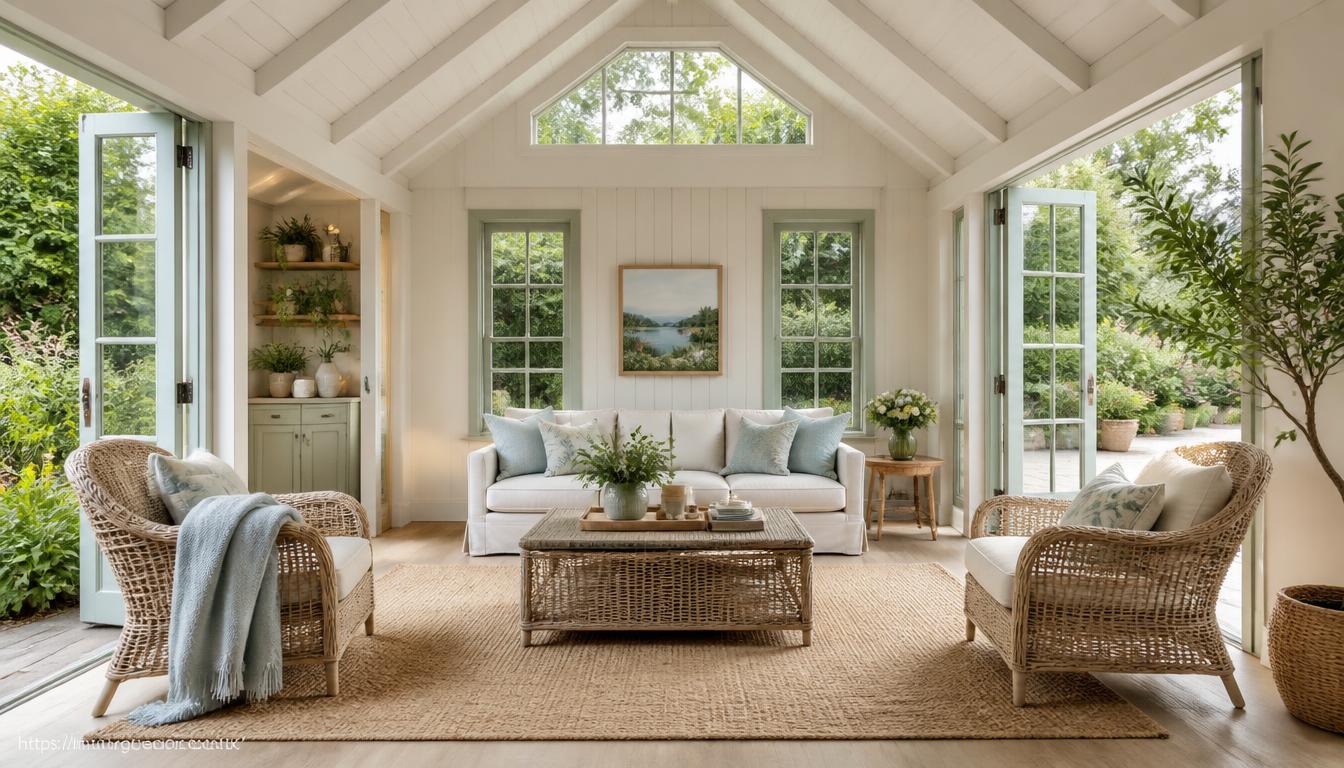
A summer house works harder when the interior is designed with intention, not just filled with leftover garden furniture. Whether it’s used as a garden office, a reading room, or a space for entertaining, a few key decisions make the difference between a shed with a nice roof and a room you actually want to spend time in.
Choosing a Purpose First
Before any decorating decisions, settle on how the space will actually be used. A garden office needs good task lighting and a proper desk setup. A relaxed reading or garden room needs comfortable seating and softer lighting instead. Trying to design for every use at once usually results in a space that serves none of them particularly well.
Making the Most of Natural Light
Most summer houses have generous glazing, so lean into it rather than blocking it with heavy curtains. Sheer or lightweight curtains soften glare without losing the light. Position seating or a desk to face out toward the garden, rather than side-on, to make the most of the view.
Insulation and Comfort
A beautifully decorated summer house is still uncomfortable if it’s too cold to use for half the year. Insulated walls, a small heater, and thicker flooring, like carpet tiles or a rug over the base floor, extend how much of the year the space actually gets used.
Interior Style Ideas
- Coastal/relaxed — pale wood, linen textiles, and a neutral palette, suited to a garden reading room
- Scandi home office — a simple desk, pale walls, and warm lighting, for a calm, focused workspace
- Botanical/garden room — plants, rattan furniture, and green tones, blurring the line between indoors and the garden outside
- Cosy snug — warmer colour, a small sofa or day bed, and layered lighting, for evening use
Frequently Asked Questions
Can a summer house be used year-round?
With proper insulation and a small heater, yes. Without it, most summer houses become too cold to use comfortably through autumn and winter.
What flooring works best in a summer house?
Carpet tiles or vinyl flooring over the existing base are popular choices, since they add warmth and are more forgiving of any minor damp than a soft carpet.
Do I need planning permission to decorate a summer house?
Interior decoration doesn’t usually need planning permission, since it doesn’t change the structure. Structural changes, like adding insulation panels or altering windows, are worth checking separately.